


The Inter-American Center of Tax Administrations (“CIAT”) published a working paper analyzing the equivalent tax burden in Latin America and the Caribbean (*). The 2018 data confirm the rising trend in the region’s tax burden. In 2018, the average equivalent tax burden in Latin America and the Caribbean (“LAC”) was 25.2%.
Equivalent tax burden = general government tax revenue + compulsory social contributions (public and private) + non-tax revenue from the exploitation of natural resources
The region keeps moving closer to OECD levels. There are still large differences between the countries analyzed: the country with the highest equivalent tax burden is Cuba, at 42.4% of Gross Domestic Product (“GDP”), and at the other end is Guatemala, at 11.8% of GDP.
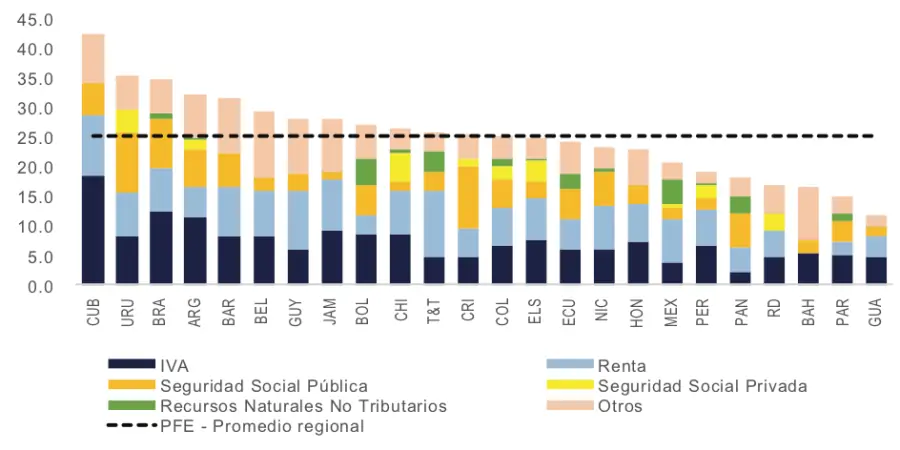
Uruguay has the second-highest tax burden relative to GDP in Latin America and the Caribbean. The taxes collected by Uruguay amount to 35.4% of GDP, broken down as follows:
- 7.4% Taxes on income
- 2.1% Taxes on property
- 12.1% Taxes on goods and services
- 10.1% Public social security contributions
- 3.8% Private social security contributions
If you would like more information or advice on this topic, our team is at your disposal.
Follow us on LinkedIn for our latest publications and news.